Nazaré Brings a Traditional Festival Back to Its Roots
Nazaré is known worldwide for giant waves, dramatic cliffs and one of the most photographed viewpoints on Portugal’s Silver Coast. But the town is also home to older and deeper traditions. In September 2026, the Festivities in Honour of Our Lady of Nazaré will return to Terreiro do Sítio for the first time since 1999 – a symbolic move that says a lot about the balance between tourism, local identity and living culture in Portugal.
A festival returns to Sítio
The Festivities in Honour of Our Lady of Nazaré will return this year to Terreiro do Sítio, the square near the Sanctuary of Our Lady of Nazaré. According to Nazaré City Council, this will be the first time since 1999 that the celebrations are held again in this historic location. The festivities are scheduled to take place from 4 to 13 September 2026.
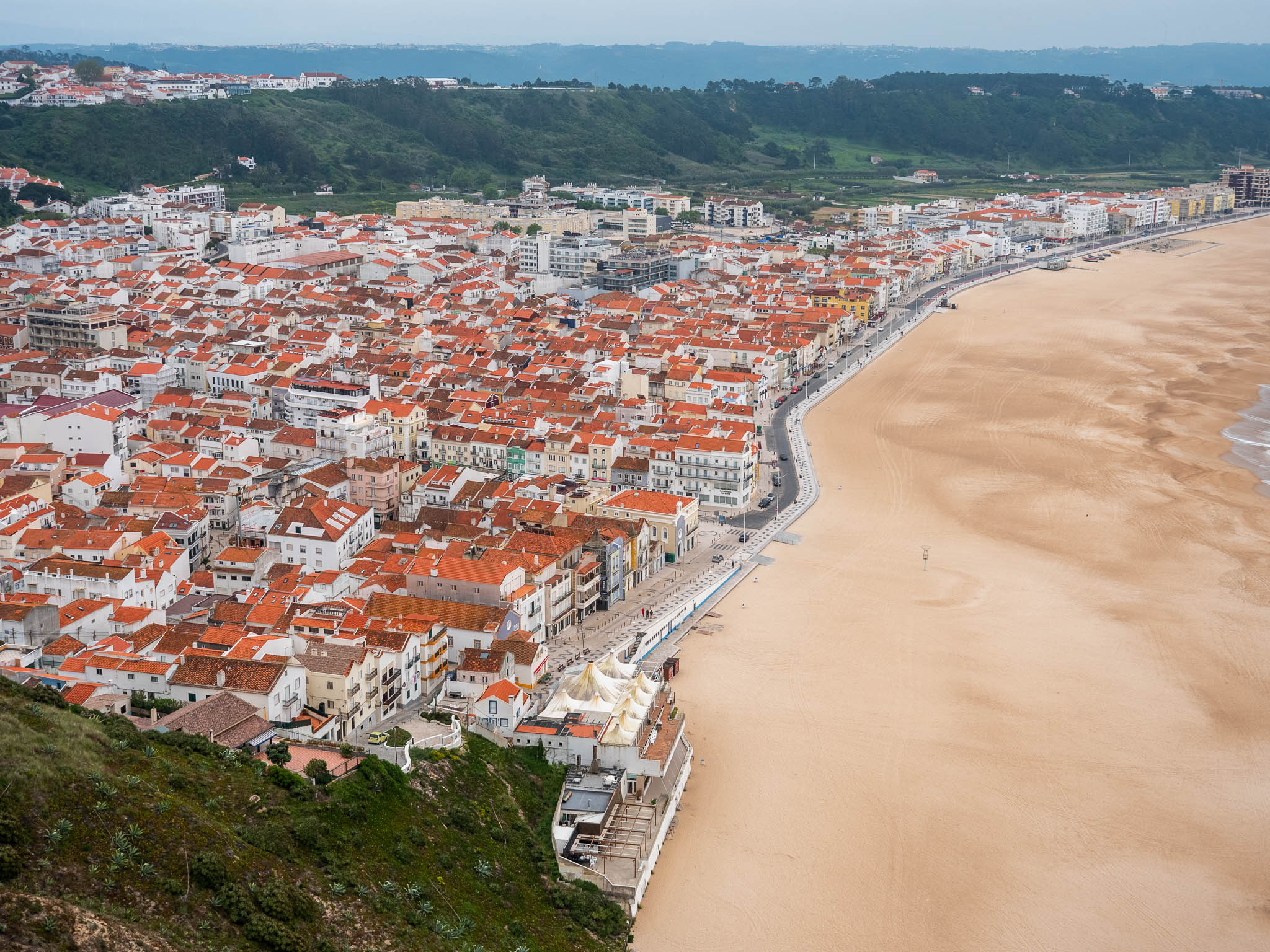
For many visitors, Sítio is the place to admire the view over Nazaré, visit the church, take photographs or walk toward the lighthouse and Praia do Norte. For local people, however, Sítio is much more than a scenic viewpoint. It is a place of faith, memory, pilgrimage and community.
Bringing the festival back to Terreiro do Sítio is therefore not just a practical change of venue. It is an attempt to reconnect the celebration with its original meaning.
More than entertainment
Portugal has many local festivals, or festas, but they should not be seen simply as summer entertainment. In many towns and villages, these celebrations combine religion, food, music, family, local associations, processions and centuries of shared memory.
The Nazaré festivities are part of this tradition. They are linked to Marian devotion and to one of the oldest pilgrimage traditions in Portugal. The Confraternity of Our Lady of Nazaré will again play a central role in organising the event, together with the municipality.
For expats living on the Silver Coast, this is one of the most important things to understand about Portuguese local culture: a festa is rarely “just a festival”. It is often a window into how a community understands itself.
Why the return matters
The mayor of Nazaré, Serafim António, says the return to Terreiro reinforces the festival’s origins and allows the town to recreate the liturgical and festive moments that once characterised the celebration. The rector of the Sanctuary, Salvatori Forte, has also described the new model as a way to recover the spirit of the festival’s origin and restore its dignity.
Those are strong words. They suggest that the celebration had, over time, moved away from some of its original character.
That is not unusual. Many traditional festivals in Portugal have changed under the pressure of tourism, commercial events, traffic, parking, larger concerts and modern expectations. Some have grown. Some have become more professional. Some have become more tourist-facing. And in the process, some have lost part of their local rhythm.
Nazaré is now trying to bring that balance back.
Nazaré has changed dramatically
Few places on the Silver Coast have changed as visibly as Nazaré.
The town was already famous in Portugal as a fishing town, pilgrimage destination and seaside resort. But the global fame of the giant waves at Praia do Norte has transformed Nazaré into an international brand. Surfers, photographers, tourists, tour operators and digital content creators have all helped put the town on the world map.
That attention has brought business, income and global recognition. But it has also brought pressure.
The municipality acknowledges that Terreiro do Sítio has become one of the most sought-after spaces in the municipality, affected by strong tourist demand, local accommodation, commercial activity and services connected to the historic area’s economy.
This is the challenge many Portuguese towns now face: how to welcome visitors without losing the local meaning of the places visitors came to see.
A new layout for an old celebration
The return to Terreiro does not mean that everything will be squeezed into the historic square. The new format spreads the festival across different areas.
According to the municipality, the major concerts will move to the Bullring. The food area will be located at Largo da Fonte Velha. Traditional amusement attractions will be placed at the football field of Associação do Planalto. More religious and culturally connected moments will remain closer to the main square and sanctuary area.
This is a practical but important decision. It separates the religious, popular, commercial and logistical parts of the event more clearly.
For residents, this may reduce pressure on the historic centre. For visitors, it may make the event easier to navigate. For the festival itself, it allows the heart of the celebration to return to its symbolic location without turning Terreiro do Sítio into an overloaded fairground.
A useful lesson for expats
Many expats move to Portugal because they love the lifestyle, the climate, the food and the slower rhythm of life. But truly understanding Portugal means going beyond beaches, property searches and restaurant recommendations.
Local festivals are among the best ways to experience the country from the inside.
They show how religion, community, history and everyday life still overlap in Portugal. They also show how strongly local identity matters, especially outside Lisbon and Porto.
For foreigners living on the Silver Coast, Nazaré’s decision is a reminder to approach these events with respect. They are not staged only for visitors. They belong first to the people who live there.
That does not mean outsiders are unwelcome. Quite the opposite. Portuguese local festivals are often warm, open and generous. But they are best experienced with curiosity rather than consumption.
Tourism and authenticity can coexist – but not automatically
The word “authentic” is often overused in travel writing. But in Nazaré, the question is real.
Can a town be both a global tourist destination and a living local community?
Can Sítio welcome visitors while still preserving its religious and historical role?
Can a traditional festival include concerts, food stalls and visitors without losing its deeper meaning?
The answer may be yes – but only if the local community remains central.
That is why the renewed role of the Confraternity and the return to Terreiro matter. They signal that the festival is not being shaped only around visitor numbers or entertainment value. It is being reconnected to the place and tradition that gave it meaning.
What visitors should look for
For those planning to visit Nazaré during the festivities in September, it may be tempting to focus only on the concerts or the busiest evenings. But the most meaningful parts of the event may be quieter.
Look for the processions.
Look at how families gather.
Notice the role of the sanctuary.
Pay attention to local associations and volunteers.
Observe how the town moves between faith, celebration and everyday life.
This is where the deeper story of Portugal often becomes visible.
A Silver Coast story, not just a Nazaré story
This is also a wider Silver Coast story.
Towns such as Nazaré, Alcobaça, Óbidos, Caldas da Rainha, São Martinho do Porto and Peniche all live with different versions of the same question: how to grow, welcome outsiders and benefit from tourism without losing the character that made them attractive in the first place.
Nazaré’s festival returning to its roots is therefore more than a local cultural update. It reflects a broader conversation about identity and change on the Silver Coast.
As more foreigners move to the region, and as more visitors discover it, these local traditions become even more important. They remind us that the Silver Coast is not just a destination. It is a network of towns, memories, devotions, working communities and inherited rituals.
Back to the roots – with modern organisation
The return of the Festivities in Honour of Our Lady of Nazaré to Terreiro do Sítio is both symbolic and practical.
Symbolic, because it brings the celebration back to the place where its meaning is strongest.
Practical, because the new model tries to organise concerts, food, amusement areas and visitor flow in a way that respects residents, religious life, local business and tourism.
That balance will not be easy. Nazaré is no longer the same town it was in 1999. The world has discovered it. The challenge now is to make sure the world does not flatten it into a postcard.
A tradition finds its way home
In a fast-changing Portugal, traditions like this matter.
They are not about nostalgia alone. They are about continuity. They help local communities remember who they are while adapting to who they are becoming.
Nazaré’s festival returning to Terreiro do Sítio is not simply a return to the past. It is an attempt to carry the past into the present with more care.
For expats on the Silver Coast, it is an invitation to see Nazaré beyond the waves – as a living town with roots, faith, memory and a community still trying to protect its own story.
Share this:

Discover more from ::Mais:Oeste:TV::
Subscribe to get the latest posts sent to your email.